
Why Licensed Waste Carriers Matter Part 1
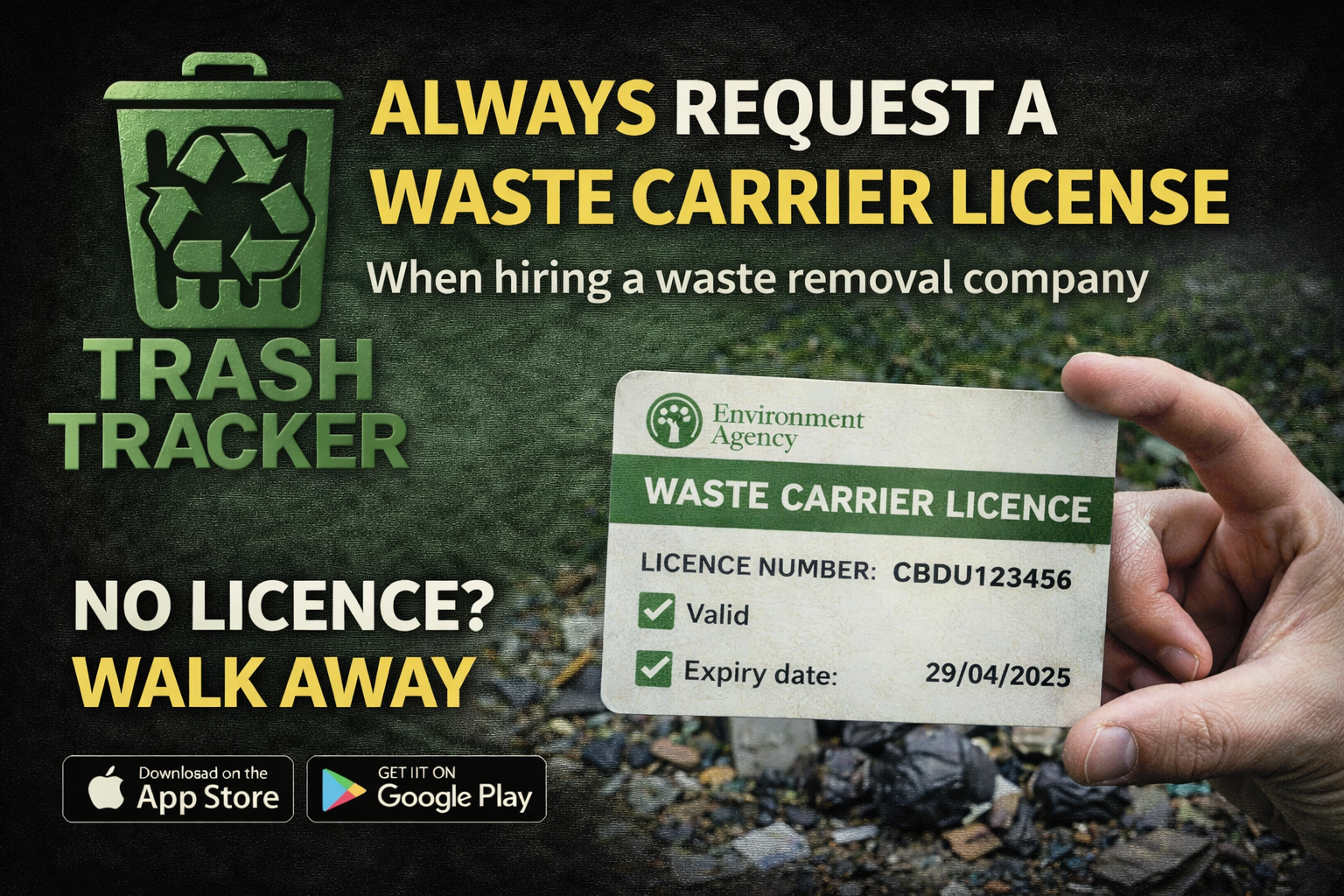
Description
That cheap rubbish quote can become expensive very quickly if your waste ends up dumped in a lay-by, a field entrance or behind an industrial estate. When you hire licensed waste carriers, you are not just paying for collection. You are paying for legal compliance, traceability and the reassurance that your waste is being handled properly.
For households, that means avoiding the headache of handing rubbish to someone who disappears after loading the van. For businesses, it means protecting your company from avoidable compliance failures, damaged reputation and unnecessary disruption. In both cases, choosing the right carrier is less about ticking a box and more about reducing risk.
What licensed waste carriers actually do:-
A licensed waste carrier is authorised to transport waste legally. In practice, that means they are registered to carry waste and should handle it in line with the relevant rules on transport, transfer and disposal. They are not simply offering a man-and-van service. They are taking responsibility for moving waste through a compliant chain.
That distinction matters because waste does not stop being your problem the moment it leaves your property. If it is passed to the wrong person and later fly-tipped, questions may come back to you. A proper carrier helps create a clear record of where the waste came from, what it was, and where it went next.
For businesses especially, the role goes further. Commercial waste collections often require regular documentation, reliable scheduling and a clearer audit trail. A licensed operator should understand those obligations and work in a way that supports them rather than creating gaps.
Why using licensed waste carriers matters more than people think
Many people only look at two things when arranging rubbish removal - speed and price. Both matter. If you have a pile of builders' waste blocking access or a property clearance that needs sorting before new tenants arrive, you want it gone quickly and at a fair cost. But speed without compliance is a false economy.
Unlicensed operators often compete on price because they cut out the expensive part of the job - lawful disposal. If they are not paying legitimate tipping charges or managing waste correctly, they can look cheaper on the surface. The risk is pushed back onto the customer, and the wider cost is paid by local communities dealing with dumped waste.
Using licensed waste carriers also helps protect responsible operators. Legitimate carriers invest in registrations, vehicles, disposal routes, administration and documentation. When customers choose on price alone, compliant businesses are undercut by those ignoring the rules. That is bad for service standards and bad for the environment.
The risks of choosing the wrong waste carrier
The most obvious risk is fly-tipping. If your rubbish is dumped illegally, you may be asked where it came from and who removed it. If you cannot show that you took reasonable steps, you may find yourself in an awkward position.
There is also the practical risk of poor service. Unverified operators may miss collections, change prices after arrival, refuse certain waste once on site or leave part of the load behind. That creates more hassle, not less.
For businesses, the stakes are higher. A builder clearing a site, a shop refitting a unit or a facilities manager arranging regular collections needs consistency. Missed collections can affect operations. Weak paperwork can affect compliance. If hazardous or controlled waste is involved, the need for a competent, properly authorised carrier becomes even more important.
It is not always black and white, though. A small independent carrier can still offer an excellent, compliant service, and a larger operator is not automatically better. The key issue is not size. It is whether they are properly licensed, transparent about disposal and able to provide the right documentation.
How to check licensed waste carriers properly
The simplest mistake is assuming that a professional-looking van, social media page or online advert means the operator is legitimate. It does not. Presentation helps, but compliance needs to be verified.
Start by asking whether the carrier is registered to carry waste. A genuine operator should not be defensive about this. They should be used to the question and able to provide details. Ask what type of waste they can take, where it will go, and what paperwork you will receive after collection.
If you are a householder, ask for proof that the waste has been transferred properly. If you are a business, make sure you receive the relevant waste transfer documentation and keep it securely. A digital record is often the easiest way to stay organised and avoid paperwork going missing later.
You should also be wary of vague answers. If someone cannot explain where the waste is going, gives unclear pricing, or seems rushed when asked about documentation, treat that as a warning sign. Trusted carriers tend to be straightforward because they have nothing to hide.